
Ask ten experienced documentary editors about the biggest mistakes in interview editing, and very few will mention software.
They won't start with transitions. Or color grading. Or keyboard shortcuts.
Instead, they'll talk about decisions.
Choosing the wrong story. Starting the edit too early. Searching instead of planning. Polishing before understanding.
These aren't technical mistakes. They're workflow mistakes. And they're surprisingly common.
Professional editors don't necessarily avoid them because they're more talented. They avoid them because they've learned that every stage of documentary editing has a different purpose.
When those stages become mixed together, the work becomes slower, more frustrating, and the story usually becomes weaker.
Here are fifteen mistakes that experienced editors consistently avoid—and what they do instead.
Mistake #1: Starting With the Timeline
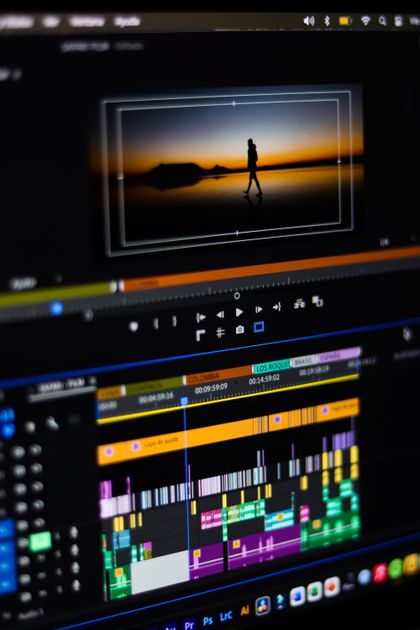
One of the strongest instincts editors have is opening Premiere Pro as soon as footage arrives.
It feels like progress. Often it isn't.
Without understanding the interviews first, the timeline quickly becomes the place where story discovery, searching, experimentation, and editing all happen simultaneously.
Professional editors usually spend more time understanding the material before they begin assembling it. The timeline becomes the place where decisions are executed—not where they're invented.
Mistake #2: Looking for Great Quotes Instead of Great Patterns
Almost every interview contains memorable moments. That doesn't mean those moments belong in the documentary.
Professional editors rarely build stories around isolated quotes. Instead, they search for recurring meaning.
When several interviews quietly reinforce the same idea, that idea usually deserves more attention than one spectacular answer.
Strong documentaries emerge from patterns—not isolated highlights.
Mistake #3: Organizing by Interviews Instead of Themes
At the beginning of a project, it's natural to think in interviews.
Founder Interview. Customer Interview. Expert Interview.
As story discovery progresses, professional editors gradually reorganize everything around themes.
Conflict. Trust. Failure. Identity. Recovery.
The documentary isn't built interview by interview. It's built idea by idea. For a deeper look at how that reorganization works in practice, see our guide to identifying narrative themes across interviews.
Mistake #4: Trying to Build the Story While Searching for Footage
Nothing destroys editorial momentum faster than constant searching.
Opening transcripts. Rewatching interviews. Looking for a better explanation. Trying to remember where someone mentioned a particular event.
Professional editors separate retrieval from editing. By the time they're shaping scenes, they've already reduced the amount of searching dramatically.
Mistake #5: Treating Every Good Answer as Essential
A common misconception is that every strong interview answer deserves a place in the documentary. It doesn't.
Professional editors ask a much harder question:
Does this answer move the story forward?
Interesting interviews and necessary interviews aren't always the same thing. Learning that distinction is one of the biggest steps in becoming a stronger documentary editor.
Mistake #6: Solving Pacing Problems With Shorter Clips
When a documentary feels slow, the instinct is often to trim everything. Sometimes that's the right decision. Often it isn't.
Professional editors first ask why the sequence feels slow.
- Has the audience stopped learning?
- Is the information repetitive?
- Has emotional progression stalled?
If so, shortening clips may only hide the underlying structural problem.
Good pacing comes from continual narrative progression—not simply fewer seconds. For more on this, see our guide to how professional editors pace interview stories.
Mistake #7: Thinking Every Silence Needs to Be Removed
Many editors become uncomfortable with pauses.
Professional editors distinguish between hesitation and reflection.
One interrupts momentum. The other creates emotion.
Knowing which is which often matters more than trimming another second from the timeline.
Mistake #8: Believing B-Roll Can Rescue Weak Storytelling
Beautiful visuals can make a sequence feel richer. They can't make an unclear story become clear.
Professional editors solve narrative problems before visual ones. Once the story works, B-roll becomes dramatically more effective. It reinforces progression. It doesn't replace it.
For a full breakdown of why visuals can't substitute for structure, see our article on why B-roll cannot fix a weak story.
Mistake #9: Refining Before the Structure Is Stable
One of the easiest traps to fall into is polishing scenes that may not survive the next edit.
Cleaning dialogue. Adjusting transitions. Fine-tuning music. Perfecting B-roll.
None of those tasks are wrong. They're simply expensive if the story is still changing.
Professional editors constantly ask themselves: "Am I improving this scene, or am I improving a scene that might disappear tomorrow?"
Only after the structure feels stable does refinement become a worthwhile investment.
Mistake #10: Explaining Everything Too Early
Editors naturally want audiences to understand what's happening. The result is often documentaries that answer every question before viewers have a chance to ask it.
Professional editors pace information differently. They allow curiosity to form first. Then they satisfy it.
Instead of beginning with explanations, they often begin with uncertainty. The audience becomes an active participant rather than a passive listener. Understanding arrives gradually. And that progression creates momentum.
Mistake #11: Letting Interviews Repeat the Same Narrative Job
Three different people explaining the same point rarely makes the story stronger. It usually makes it slower.
Professional editors think about narrative function instead of interview quality.
Every interview should contribute something unique. Perhaps one introduces the conflict. Another complicates it. A third challenges the audience's assumptions. A fourth resolves it.
If two interviews perform exactly the same editorial job, one of them probably isn't necessary.
Mistake #12: Using Memory Instead of a System
Small projects can often be managed from memory. Large interview-driven documentaries cannot.
Editors frequently tell themselves: "I know someone talked about this somewhere." Then the search begins.
Professional editors build systems instead. Theme maps. Paper edits. Organized selects. Transcript annotations.
The goal isn't simply staying organized. It's reducing the number of times the editor has to stop thinking about the story in order to search for it.
Memory eventually fails. Editorial systems scale.
Mistake #13: Treating Every Revision Like a New Beginning
Some editors completely rethink the documentary after every round of feedback. Others refuse to change anything.
Professional editors do neither. They distinguish between structural notes and refinement notes.
If feedback changes the audience's understanding, the structure may need revision. If feedback only improves the experience, refinement is enough.
Understanding that distinction prevents endless cycles of rebuilding scenes that were already working.
Mistake #14: Confusing Visual Energy With Narrative Energy
A fast-moving timeline doesn't automatically create an engaging documentary.
More B-roll. More cuts. More movement.
Those choices may create visual activity. They don't necessarily create narrative progression.
Professional editors ask a different question: "What is the audience understanding now that they didn't understand thirty seconds ago?"
If the answer is "nothing," the problem isn't visual. It's structural.
Mistake #15: Forgetting That the Audience Knows Less Than the Editor
By the twentieth viewing, every documentary feels obvious. Editors know every interview. Every transition. Every reveal.
The audience doesn't.
Professional editors constantly try to recover the perspective of a first-time viewer. They ask:
- Is this information arriving too early?
- Have we introduced too many people?
- Does this transition actually make sense?
- Have we assumed knowledge the audience doesn't have?
Many pacing and clarity problems disappear simply by remembering that viewers are encountering the story for the first time.
Why These Mistakes Keep Happening
It's tempting to think these mistakes come from inexperience. In reality, they come from pressure.
Deadlines encourage editors to start cutting before they've fully understood the material. Editing software encourages constant refinement. Large interview collections overwhelm memory. The timeline makes experimentation feel productive.
None of these pressures are unusual. Professional workflows don't eliminate them. They simply create better places to solve them.
Story discovery happens before structural editing. Structural editing happens before refinement. Refinement happens before finishing.
Each stage has one primary responsibility. Keeping those responsibilities separate dramatically reduces unnecessary work.
Most Mistakes Are Really Workflow Problems
Something interesting happens when you look back at every mistake on this list.
Very few of them involve editing technique. Almost all of them involve editorial sequence.
The editor didn't make the wrong decision. They made the right decision at the wrong time.
- Trying to discover themes during the rough cut.
- Trying to perfect pacing before the structure exists.
- Trying to solve repetition with B-roll.
- Trying to remember interviews instead of organizing them.
Professional editors gradually learn that efficiency isn't about working faster. It's about solving problems in the order they naturally appear.
A Real-World Example: Same Footage, Two Completely Different Workflows
Imagine two editors receive exactly the same documentary project. Twenty interviews. Thirty hours of footage. The same deadline. The same client. The same story.
Editor A
Opens Premiere immediately. Starts trimming interviews. Builds an opening. Adds temporary B-roll. Changes the opening. Finds a better quote. Rebuilds the first sequence. Adds music. Moves scenes around. Returns to Interview 14. Finds another better answer. Starts over.
After several days, the timeline looks busy. But most of the work has been spent rediscovering the story.
Editor B
Starts differently. Reads every transcript. Identifies recurring themes. Groups similar answers. Maps narrative progression. Builds a paper edit. Creates organized selects. Only then opens the timeline.
Now every edit answers a much simpler question: Does the story work on screen?
Both editors invested effort. Only one invested it in the right order. That's the difference professional workflows create.
The Biggest Editorial Improvement Isn't Speed
Many editors spend years trying to edit faster. Learning shortcuts. Buying faster computers. Optimizing Premiere.
Those things absolutely help. But they rarely create the biggest improvement.
The biggest improvement comes from reducing uncertainty. Because uncertainty creates:
- searching
- rebuilding
- second-guessing
- repeated decisions
- unnecessary revisions
Professional editors don't eliminate those activities completely. They simply move them to cheaper stages of the workflow.
By the time footage reaches the timeline, most of the difficult questions have already been explored. That's why experienced editors often appear faster. They're carrying fewer unanswered questions into the edit.
How AI Prevents These Mistakes
Artificial intelligence is often described as a way to edit automatically. That's not where its greatest value lies.
Its greatest value is helping editors avoid expensive mistakes before editing begins.
For example, AI can help:
- identify recurring narrative themes
- compare interview answers discussing the same idea
- surface contradictions across interviews
- organize transcript-based selects
- reveal repeated explanations
- highlight possible story structures
Notice what all of those tasks have in common. They reduce uncertainty. They don't replace editorial judgment.
The editor still decides: which story to tell, which perspective matters most, where emotion should arrive, what belongs in the final cut.
Technology accelerates preparation. Editors create meaning. That's why AI fits naturally into professional documentary workflows. Not as a replacement for editing. As a way to improve the decisions that happen before editing. For more on this, see our overview of how AI is changing interview-based post-production.
A Better Way to Think About These Fifteen Mistakes
Looking back, it's easy to notice a pattern. Most editing advice focuses on technique. This list doesn't.
Because almost none of these mistakes are caused by poor editing technique. They're caused by poor editorial sequencing.
Here's another way to visualize them.
Discovery
- ✓ Understand interviews
- ✓ Identify themes
- ✓ Compare perspectives
Organization
- ✓ Build paper edit
- ✓ Create selects
- ✓ Reduce uncertainty
Structure
- ✓ Assemble rough cut
- ✓ Validate progression
- ✓ Remove repetition
Refinement
- ✓ Pace scenes
- ✓ Add B-roll
- ✓ Polish transitions
- ✓ Fine cut
Now imagine reversing that order. Refining before understanding. Building before organizing. Searching while editing.
That's where most of the mistakes in this article come from. Not from inexperience. From solving the right problems at the wrong stage.
Professional Editors Think in Questions
One pattern quietly connects every mistake we've discussed. Professionals ask different questions depending on where they are in the workflow.
During transcript review they ask: What story is hiding here?
During theme discovery they ask: What ideas keep repeating?
During the paper edit they ask: What should the audience understand next?
During the rough cut they ask: Does this structure actually work?
During the fine cut they ask: How can this experience become more powerful?
Notice what's missing. They aren't asking every question at once. Each stage has one purpose. That separation dramatically reduces unnecessary work.
The Best Workflow Prevents Mistakes Before They Exist
Perhaps that's the biggest lesson professional editors eventually learn.
Good workflows don't simply recover from mistakes. They prevent many of them from happening.
- When themes are identified early, repetition becomes easier to spot.
- When the paper edit is strong, the rough cut requires fewer structural revisions.
- When the story is working, pacing becomes easier.
- When pacing works, B-roll becomes more intentional.
Every stage supports the next one. That's why experienced editors don't think about isolated techniques. They think about systems.
Conclusion
The biggest interview editing mistakes rarely happen because editors don't know how to use their software. They happen because storytelling decisions are made in the wrong place, at the wrong time, or in the wrong order.
Starting inside the timeline. Searching while editing. Building before understanding. Refining before deciding. Trying to fix structural problems with visual ones.
These habits are common because modern editing software makes them feel productive.
Professional editors gradually learn something different. Every stage of the workflow has a specific purpose.
- Story discovery uncovers meaning.
- Theme mapping organizes it.
- Paper edits shape it.
- Selects prepare it.
- Rough cuts validate it.
- Fine cuts refine it.
When each stage solves the problems it was designed to solve, editing becomes calmer, faster, and far more intentional.
The goal isn't avoiding mistakes through perfection. It's building a workflow where those mistakes become increasingly unlikely.
That's what separates experienced documentary editors from editors who simply spend more hours inside the timeline.
Most editing mistakes don't happen because editors lack technical skill—they happen because the hardest story decisions are still being made after the timeline is already full.
Supacut helps editors move story discovery, theme identification, transcript comparison, and structural planning earlier in the workflow, so the first cut begins with editorial clarity instead of editorial uncertainty.