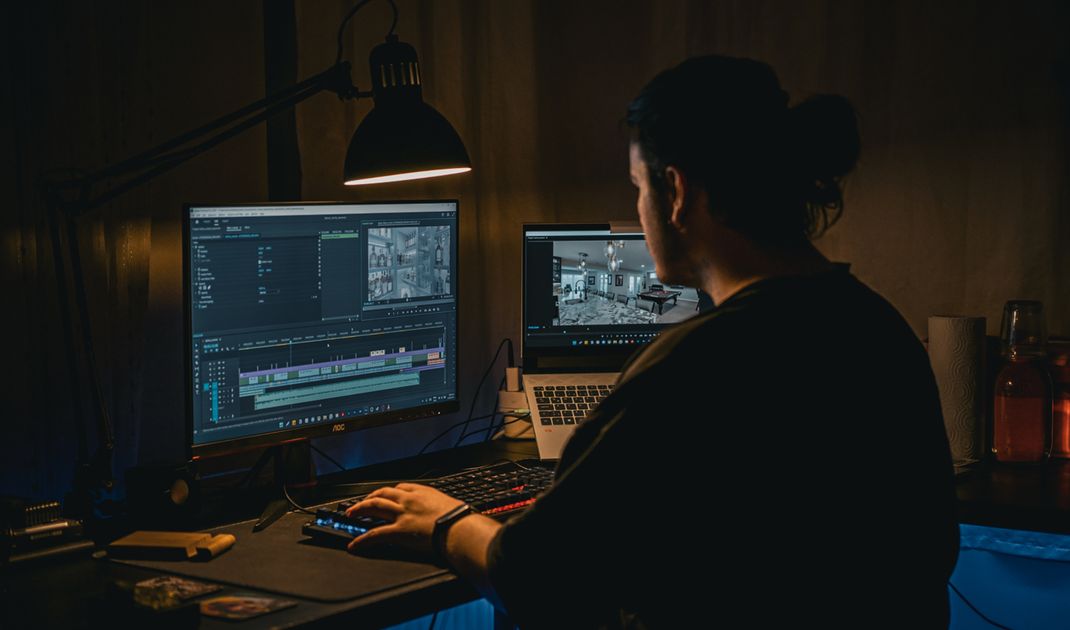
Opening a five-hour interview for the first time can feel overwhelming. Not because of the file size. Not because Premiere Pro struggles with it. But because the editor has no mental map of what's inside.
Somewhere in those five hours are: important story moments, repeated explanations, emotional turning points, unnecessary tangents, contradictory opinions, and the quote that may define the entire documentary.
The challenge isn't watching five hours. It's understanding what those five hours actually contain.
Organization Is More Than File Management
Most advice about organizing interviews focuses on media. Create bins. Rename clips. Use color labels. Build folder structures.
Those habits are valuable. But they organize files. They don't organize the interview itself.
Professional editors eventually shift from organizing media to organizing ideas.
Don't Watch Like an Audience
The first viewing shouldn't feel like watching a finished documentary. It should feel like research.
Instead of asking: "Is this interesting?" Ask:
- What topic is being discussed?
- Why does this moment matter?
- Does this idea appear elsewhere?
- What question does this answer?
- What new question does it create?
This mindset transforms a long interview into something much easier to navigate.
Most Five-Hour Interviews Repeat Themselves
People naturally revisit the same ideas. Sometimes intentionally. Sometimes without realizing it. Different wording. Different examples. Different emotional intensity.
Professional editors don't treat every explanation as unique. They begin recognizing clusters of related ideas. That dramatically reduces the apparent complexity of the interview.
Themes Matter More Than Timecodes
Many editors organize interviews chronologically. 00:15. 00:42. 01:18. 02:07. Those references help locate material. They don't explain what the material means.
Experienced editors organize interviews around themes. Conflict. Background. Motivation. Transformation. Regret. Hope. The interview immediately becomes easier to understand.
Don't Build the Timeline Yet
One of the biggest mistakes is opening Premiere and immediately creating sequences. At that point, the editor still doesn't understand the interview.
Instead, delay the timeline. Spend time discovering the conversation first. The clearer the interview becomes, the easier every later editing decision will feel.
Every Long Interview Already Contains Structure
Five hours of conversation may seem chaotic. It rarely is. Patterns exist. Ideas repeat. Stories connect. Topics naturally group together.
The editor's job isn't creating order from nothing. It's revealing the structure that already exists.
A Professional Workflow for Organizing Long Interviews
Experienced editors rarely watch a five-hour interview from beginning to end without purpose. Every review has an objective. Each pass answers different editorial questions. By the time the interview reaches the timeline, much of the difficult thinking has already happened.
Step 1: Understand the Conversation
The first review isn't about selecting quotes. It's about understanding the interview as a whole.
Ask yourself:
- What is this person really talking about?
- Which topics dominate the conversation?
- Where does the emotional tone change?
- What feels genuinely important?
- What surprises you?
Resist the temptation to start editing immediately. The goal is familiarity, not selection.
Step 2: Divide the Interview Into Themes
Once you've completed the initial review, stop thinking chronologically. Instead, organize the interview into thematic sections. For example:
- personal background
- defining moments
- conflict
- failures
- lessons learned
- resolution
These categories don't need to match the order of the conversation. Their purpose is to organize meaning rather than time.
Step 3: Identify Repetition
Long interviews almost always contain multiple versions of the same idea. Instead of treating every explanation as unique, compare them.
Ask:
- Which version is the clearest?
- Which feels the most authentic?
- Which adds new information?
- Which can safely disappear?
Reducing repetition is often one of the biggest time-saving opportunities in long-form editing.
Step 4: Mark Story Turning Points
As themes become clearer, identify moments that change the direction of the conversation. These often include:
- unexpected revelations
- emotional shifts
- changes in perspective
- moments of conflict
- important decisions
- new understanding
These turning points frequently become the backbone of the documentary.
Step 5: Build Relationships Between Ideas
Professional editors don't think of interviews as isolated answers. They think in relationships.
Ask questions like:
- Which earlier statement explains this moment?
- Does another section contradict this idea?
- Is this the consequence of something discussed before?
- Should these moments appear together even though they're hours apart?
This is where the interview begins transforming into a narrative instead of a conversation.
Common Mistakes When Organizing Long Interviews
Editors approaching lengthy interviews often fall into familiar patterns.
Mistake #1: Organizing by Time Instead of Meaning
Timecodes help you relocate clips. They don't help you understand them. Editors remember stories through themes, not timestamps.
Mistake #2: Highlighting Everything
After five hours, almost every interesting quote can feel important. If everything is highlighted, nothing has been prioritized.
Professional editors constantly ask: "Does this move the story forward?"
Mistake #3: Reviewing Only Once
The first viewing creates familiarity. The second reveals patterns. The third confirms structure. Understanding deepens with every pass.
Professional editors expect their interpretation of the material to evolve.
Mistake #4: Jumping Into the Timeline Too Early
The timeline is an expensive place to think. Every structural uncertainty creates more rebuilding later.
Editors who understand the interview first usually spend far less time reorganizing the rough cut.
Organization Creates Editorial Confidence
By the end of this process, experienced editors usually know:
- what the interview is really about
- which ideas define it
- where repetition exists
- what emotional journey it contains
- which moments deserve further exploration
At that point, opening Premiere feels completely different. The interview no longer feels like five overwhelming hours of footage. It feels like a collection of connected ideas waiting to become a story.
AI Is Changing How Editors Handle Long Interviews
For years, organizing a five-hour interview meant one thing: Watch everything. Take notes. Highlight interesting quotes. Repeat the process until the structure slowly emerged.
That workflow still works. But it requires enormous amounts of time.
Today, AI is changing how editors approach that first review. Automatic transcription. Interview summaries. Theme detection. Transcript search. Pattern recognition.
Instead of starting with five hours of video, editors can start with a structured understanding of the conversation.
Organization Is Becoming Editorial, Not Technical
Traditional organization focused on media management. Create folders. Rename clips. Separate cameras. Sync audio. Label bins.
Those tasks remain important. But they don't answer the editor's biggest question: "What does this interview actually contribute to the story?"
Modern workflows increasingly organize interviews around meaning rather than media. That's a fundamental shift.
Long Interviews Become Smaller When Ideas Replace Time
A five-hour interview feels overwhelming because editors initially experience it as five continuous hours.
Professional editors eventually stop thinking that way. Instead, they begin seeing:
- six major themes
- three recurring conflicts
- four emotional turning points
- two unanswered questions
- one central transformation
The interview hasn't become shorter. It has become understandable. And that's what makes editing feel dramatically easier.
Story Discovery Replaces Endless Review
Many editors believe speed comes from watching interviews faster. Professional workflows suggest something different.
The real improvement comes from needing fewer complete reviews. Once themes, patterns, and relationships become visible, editors stop searching randomly. They know where to look. They know what matters. They know which sections deserve attention.
The review process becomes intentional instead of repetitive.
The Timeline Should Never Be the First Map
One of the biggest mistakes editors make is allowing the timeline to become the first organized version of the interview.
Professional editors build that map beforehand. By the time clips reach Premiere, they already understand:
- the major themes
- the strongest soundbites
- where repetition exists
- how the emotional journey unfolds
- which ideas deserve emphasis
The timeline becomes a way of expressing that understanding—not discovering it.
A Story-First Workflow for Long Interviews
Professional editors don't organize long interviews by reducing hours. They organize them by increasing clarity.
Notice that the interview doesn't become shorter because editors watch less. It becomes smaller because they understand it better. That's the real purpose of organization.
Conclusion
Organizing a five-hour interview isn't about creating better folders or cleaner timelines. It's about transforming an overwhelming conversation into a clear editorial structure.
Professional editors don't simply catalogue footage. They identify themes. Compare ideas. Recognize repetition. Find emotional turning points. And gradually build a mental model of the story before assembling the first sequence.
That's why long interviews stop feeling intimidating. Not because there's less material. Because the material has become understandable.
The best organization isn't measured by how quickly you can find a clip. It's measured by how confidently you know why that clip matters.
Supacut helps editors organize long interviews around story instead of chronology.
By automatically grouping related themes, connecting similar ideas across conversations, surfacing the strongest soundbites, and generating a story-first rough cut, it transforms hours of interview footage into a structured narrative before editing begins in Premiere Pro, DaVinci Resolve, or Final Cut Pro.