
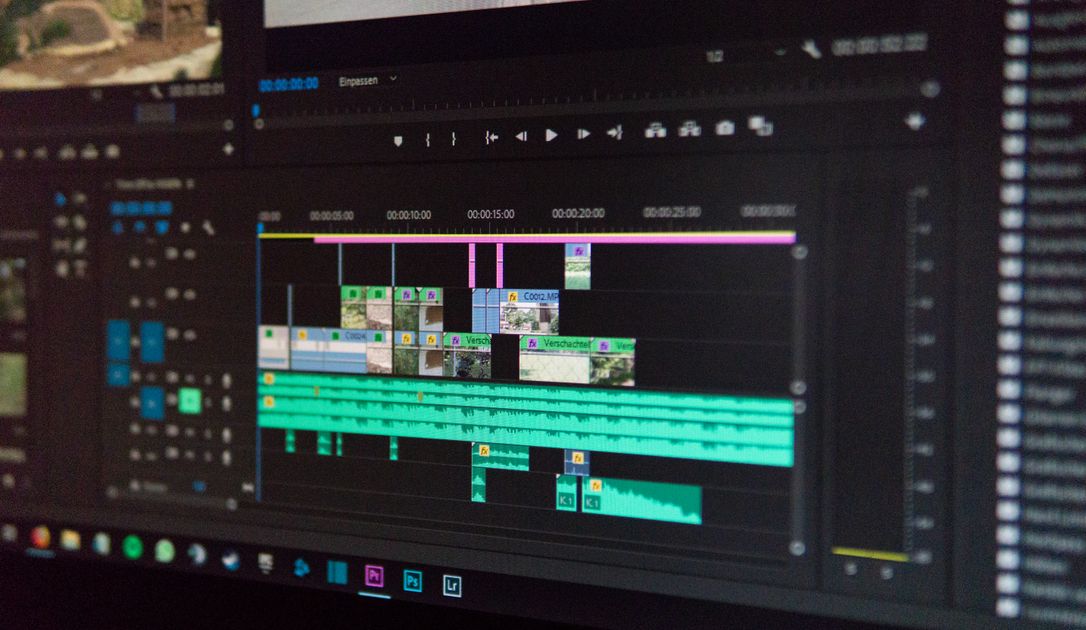
At first glance, transcript-based editing and traditional editing seem like two different workflows. One starts with a timeline. The other starts with text. One relies on clips. The other relies on transcripts.
But the biggest difference isn't where editors click. It's where they think. Transcript-based editing changes when—and how—editorial decisions happen.
Traditional Editing Starts With Footage
For decades, interview editing followed a familiar process. Editors watched footage. Scrubbed through timelines. Marked In and Out points. Built sequences. Refined the structure while editing.
The story gradually emerged through the timeline itself.
That workflow still works. Many outstanding documentaries have been built this way. But it's also time-consuming. Because editors often discover the narrative while simultaneously trying to construct it.
Transcript-Based Editing Starts With Meaning
Working from transcripts changes the starting point. Instead of immediately manipulating clips, editors first review conversations. They read. Compare. Search. Organize. Recognize recurring ideas.
Before a single clip reaches the timeline, they already understand much more about the material. The story begins taking shape before visual assembly begins.
Both Workflows Still End in the Timeline
Transcript-based editing doesn't eliminate the timeline. Every documentary still needs to be assembled. Dialogue still needs trimming. Pacing still needs refinement. Visual storytelling still matters.
The timeline remains essential. The difference is that editors arrive there with a clearer understanding of what they're trying to build.
Traditional Editing Encourages Exploration
When editors work directly with footage, experimentation becomes part of the creative process. Different structures are tested. Quotes are replaced. Scenes move repeatedly. The story gradually becomes clearer.
This exploratory approach can produce outstanding work. It also creates many revisions.
Transcript-Based Editing Encourages Understanding
Working from transcripts shifts more of that exploration earlier in the process. Editors ask:
- Which ideas repeat?
- Which interviews belong together?
- What themes are emerging?
- Which perspective changes the story?
- What should the audience understand first?
By answering those questions before editing begins, the first assembly often becomes much more intentional.
Neither Workflow Replaces Editorial Judgment
Transcript-based editing doesn't make creative decisions automatically. Editors still determine:
- which interviews matter
- which soundbites deserve inclusion
- where emotional tension should build
- how scenes connect
- what story the audience experiences
The transcript changes the workflow. Not the responsibility.
Comparing the Two Workflows
Traditional editing and transcript-based editing often produce the same final result. A documentary. An interview. A rough cut. The difference lies in how editors arrive there.
One workflow discovers the story while building the timeline. The other discovers the story before building it.
Traditional Editing: Discover While Editing
In a traditional workflow, the timeline becomes the primary workspace. Editors:
- watch interviews
- trim clips
- rearrange scenes
- test different structures
- replace soundbites
- rebuild sequences
The documentary gradually emerges through experimentation. This approach offers tremendous creative freedom. It also means that many structural decisions happen late in the process.
Transcript-Based Editing: Discover Before Editing
Transcript-based workflows shift much of that exploration earlier. Editors begin by reviewing conversations. Comparing interviews. Grouping recurring ideas. Identifying themes. Evaluating narrative possibilities.
By the time the timeline opens, many of the biggest editorial questions have already been answered. The rough cut becomes a way to express those decisions rather than search for them.
Which Workflow Is Faster?
Many people assume transcript-based editing is faster because editing text is faster than editing video. That's only part of the story.
The biggest time savings come from reducing uncertainty. Editors spend less time:
- searching for quotes
- comparing interviews repeatedly
- rebuilding sequences
- testing multiple structures
- replacing weak soundbites
The workflow becomes more efficient because editors make better decisions earlier—not because text is inherently faster than video.
Which Workflow Produces Better Stories?
Neither workflow guarantees a stronger documentary. Story quality still depends on editorial judgment. An experienced editor can create an outstanding documentary using either approach.
The advantage of transcript-based editing is that it gives editors a clearer view of the material before major structural decisions are made. That often leads to:
- fewer revisions
- stronger narrative consistency
- less repetition
- more confident rough cuts
The workflow supports better decisions. It doesn't make them automatically.
Common Misconceptions
Editors comparing these workflows often misunderstand what transcript-based editing is actually replacing.
Misconception #1: It Replaces the Timeline
It doesn't. Every documentary still needs visual editing. Dialogue timing. Pacing. B-roll. Sound design. Color grading. The timeline remains central to the process.
Transcript-based editing simply changes what happens before editors spend most of their time there.
Misconception #2: It Removes Creativity
Some editors worry that working from transcripts makes editing feel mechanical. In reality, it often creates more room for creativity. Less time spent searching. More time spent thinking about structure, emotion, and storytelling.
The creative work doesn't disappear. It shifts toward higher-value decisions.
Misconception #3: It's Only Useful for Long Interviews
Transcript-based workflows provide the greatest benefit on interview-heavy projects. But even shorter interviews become easier to review when editors can quickly compare ideas, identify repetition, and locate important moments without repeatedly scrubbing through footage.
Misconception #4: It Eliminates the Need to Watch Footage
Professional editors still watch interviews. Body language. Facial expressions. Tone of voice. Silence. Timing. None of these are fully captured by text.
The transcript complements the footage. It doesn't replace it.
The Best Editors Combine Both Approaches
Most experienced editors don't choose one workflow exclusively. They combine them. They use transcripts to understand the material. Then they use the timeline to communicate it.
Reading informs editing. Editing refines understanding. The two workflows strengthen one another rather than compete.
The Real Difference Is Editorial Timing
Ultimately, transcript-based editing doesn't change what editors do. It changes when they do it. Instead of discovering the story after building several versions of a rough cut, they discover much of it before the first sequence exists.
That shift reduces uncertainty throughout the rest of the project.
AI Is Blurring the Line Between Both Workflows
For years, editors thought of transcript-based editing and traditional editing as separate approaches. One happened in the transcript. The other happened in the timeline.
Today, that distinction is becoming less meaningful. AI-powered tools now allow editors to move seamlessly between both environments. Search interviews. Review conversations. Identify themes. Then immediately begin assembling the timeline.
The workflow is becoming continuous rather than divided.
The Timeline Is No Longer the Starting Point
Traditional editing often begins with footage. Transcript-based editing begins with conversations. The next generation of workflows begins with understanding.
Editors increasingly spend less time asking: "Where is this clip?" And more time asking: "Why does this clip matter?"
That's a fundamental change. The timeline remains essential. It simply stops being the place where the biggest editorial questions are answered.
Traditional Skills Still Matter
Transcript-based editing doesn't replace decades of editing craft. Editors still need to understand:
- pacing
- rhythm
- emotional timing
- visual storytelling
- performance
- silence
- audience attention
Those skills remain just as important as ever. The transcript simply helps editors reach those creative decisions with more context and greater confidence.
Story Discovery Is Becoming the First Edit
Perhaps the biggest change isn't technical at all. It's conceptual. Many editors used to think the first edit happened inside the timeline. Increasingly, the first edit happens during story discovery.
When editors identify:
- recurring themes
- unnecessary repetition
- emotional turning points
- conflicting perspectives
- the strongest narrative path
they're already editing. No clips have been trimmed yet. But the documentary is already taking shape.
A Modern Editorial Workflow
The strongest interview workflows don't choose between transcripts and timelines. They use each for what it does best.
Notice that the timeline hasn't disappeared. It has simply moved to the stage where it creates the most value. After the narrative has already become clear.
Conclusion
Transcript-based editing and traditional editing aren't competing philosophies. They're complementary stages of the same editorial process.
Traditional editing remains the best environment for shaping rhythm, visuals, pacing, and emotional impact. Transcript-based editing excels at helping editors understand interviews before those creative decisions are translated into a timeline.
The strongest documentaries benefit from both. Editors first discover the story. Then they refine how that story is experienced.
Because editing has never been about choosing between text and video. It's about using every available tool to make better editorial decisions.
Supacut bridges transcript-based editing and traditional editing by extending the workflow beyond searchable text.
Instead of using transcripts only to locate quotes, editors can organize interviews into themes, compare ideas across conversations, identify the strongest narrative moments, and generate a story-first rough cut before refining it in Premiere Pro, DaVinci Resolve, or Final Cut Pro. The result isn't replacing traditional editing. It's arriving at the timeline with a stronger understanding of the story you're about to tell.