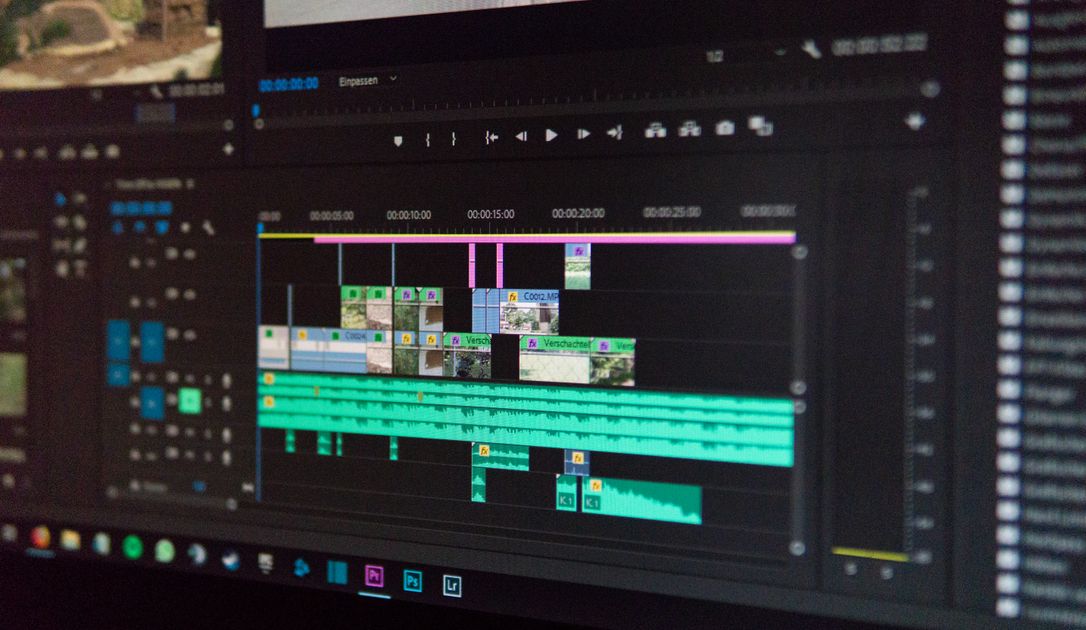

For decades, video editing has revolved around one fundamental interface: the timeline. Editors scrub through footage, mark in and out points, drag clips into sequences, and slowly assemble a story one cut at a time. It's a workflow that has powered everything from Hollywood films to YouTube videos.
But as productions increasingly rely on interviews, podcasts, webinars, documentaries, and long-form conversations, another way of editing has emerged. Instead of searching through hours of footage visually, editors can now work directly from the spoken words.
This approach is known as text-based video editing. Rather than treating dialogue as something hidden inside clips, text-based editing converts speech into searchable text, allowing editors to navigate, review, and even assemble sequences by interacting with transcripts.
It's one of the biggest workflow shifts in modern post-production — not because it replaces traditional editing, but because it changes how editors discover stories before refining them on the timeline. For a direct comparison with timeline-first cutting, see transcript-based editing vs traditional editing. In this guide, we'll explain what text-based video editing is, how it works, when to use it, and why it's becoming an essential part of documentary, interview, and narrative editing workflows.
What Is Text-Based Video Editing?
Text-based video editing is a workflow where spoken dialogue is converted into a transcript that editors can search, review, and use to make editing decisions.
Instead of locating a sentence by scrubbing through footage, you simply search for the words. Instead of reviewing interviews in real time, you can read them. Instead of trimming clips first, you can organize ideas before opening the timeline.
The transcript becomes another editing interface alongside the timeline.
Importantly, text-based editing doesn't replace the timeline — it complements it. Once the story has been structured through dialogue, editors still refine pacing, visuals, sound design, music, and transitions inside their editing software.
How Does Text-Based Editing Work?
Most text-based workflows follow a similar sequence:
Modern editing applications automate much of the transcription process, making it possible to begin reviewing footage almost immediately after recording. This is particularly valuable for projects with hours of dialogue, where reading can be significantly faster than repeatedly watching footage.
Transcript-Based Editing vs Traditional Timeline Editing
Traditional editing starts with footage. Text-based editing starts with language. That's a subtle but important distinction.
When working directly on the timeline, editors often spend considerable time searching for specific moments, replaying interviews, and remembering where someone mentioned a particular idea. Transcript-based editing changes that process by making every spoken word searchable.
Instead of asking "Where did they say that?" you can search the transcript instantly. This reduces time spent hunting for clips and allows editors to focus on evaluating ideas rather than locating them.
Why Text-Based Editing Matters for Storytelling
The biggest misconception about text-based editing is that it's primarily a speed feature. In reality, its greatest advantage is editorial clarity.
When you're reading a transcript, you're no longer distracted by camera angles, pauses, or technical imperfections. You're evaluating the strength of the story itself. This makes it easier to identify recurring themes, compare similar quotes across interviews, and build a coherent narrative before worrying about visuals.
For documentary editors, this mirrors the long-standing practice of creating paper edits — only now the process is integrated directly into modern editing workflows. For a detailed look at how professional editors approach this, see our guide to editing interview transcripts like a documentary editor.
Common Use Cases
Text-based video editing is especially useful for:
- Documentary interviews
- Customer testimonials
- Podcasts
- Webinars
- Educational content
- News interviews
- Corporate storytelling
- Research interviews
- Oral histories
- Long-form YouTube videos
Any project where dialogue drives the story can benefit from transcript-based editing.
Does Premiere Pro Support Text-Based Editing?
Yes. Adobe Premiere Pro includes built-in Speech to Text features that automatically generate transcripts for supported languages. Editors can search dialogue, navigate interviews, and create rough selections using the transcript panel instead of relying solely on the timeline.
For a deeper look at how Premiere's transcript tools work in practice — including where they excel and where their limits appear — see our guide to Premiere Pro text-based editing.
Where AI Fits In
Artificial intelligence has dramatically improved the accessibility of text-based editing by automating transcription and making dialogue searchable within minutes. Some AI-powered workflows also help editors identify themes, organize interviews, or generate an initial structure from transcripts.
However, AI doesn't replace editorial judgment. It can surface information — but it can't decide which quote creates emotional impact, where a story should begin, or how multiple perspectives fit together. Those decisions remain the editor's responsibility.
This is where specialized workflows become valuable. Tools like Supacut build on transcript-based editing by helping Premiere Pro editors move from raw interview transcripts to a structured first assembly, allowing them to spend less time organizing dialogue and more time shaping the story. For a broader look at how AI is changing this space, see our overview of AI story editors and interview-based post-production.
Is Text-Based Editing Better Than Traditional Editing?
It's better for some stages — not all.
Text-based editing excels at:
- Reviewing interviews quickly
- Finding specific quotes
- Comparing multiple speakers
- Building paper edits
- Organizing narratives
- Creating rough cuts
Traditional timeline editing remains essential for:
- Visual pacing
- Music
- Sound design
- Motion graphics
- Color correction
- Fine trimming
The most effective editors combine both approaches rather than treating them as competing workflows.
Conclusion
Text-based video editing isn't a replacement for traditional editing — it's an evolution of the way editors approach story development. By turning dialogue into searchable, editable text, it helps reduce repetitive review, uncover stronger narratives, and streamline the path from raw interviews to a coherent first cut.
As productions continue to generate more interview-driven content, transcript-based workflows are becoming a standard part of professional post-production. Whether you're using Premiere Pro's built-in transcript features or dedicated tools designed for story-first editing, the principle remains the same: the faster you can understand the story, the faster you can create a better edit.
Ready to move beyond searching transcripts?
See how Supacut helps Premiere Pro editors transform interview transcripts into structured narrative arcs and first cuts — so you can focus on editing the story, not organizing the footage.